
Build teams
Small teams of university students in Singapore take on real briefs from businesses and charities, build agentic AI systems that handle the work, and hand over something the partner keeps using.
How a build works
Every build follows the same four steps, whether the partner is a charity with a queue of requests or a small business copying between spreadsheets.
When
The first build cycle starts later this year.
The brief
A business or charity brings a problem, not a specification: a workflow that is slow, manual, or eating volunteer hours. If nobody would use the result the following Monday, we do not take it on.
The scope
The team sits with the partner, watches the workflow as it really runs, and writes a one-page scope: what the system will do, what it will not do, and how everyone will know it works.
The build
The team meets weekly, with volunteer engineers reviewing code and prompts. Something real reaches the partner early, so feedback is about working software rather than slides.
The handover
The partner keeps everything: the code, the accounts and a one-page runbook, plus a training session for the people who will use it. The team leaves having shipped something that stays in use.
The partner keeps the code, the accounts and a one-page runbook, and the build is free for the organisation.
See the websites already shipped in the portfolio.
Who joins a team
University students in Singapore who can give a build cycle real hours each week. You do not need to have shipped anything before. Teams are mixed on purpose: people who write code, people who write clearly, and people who can sit with a partner and understand how the work is done.
Volunteer engineers support every team. They review code and prompts and help with the parts that are genuinely hard, but the team owns the build.
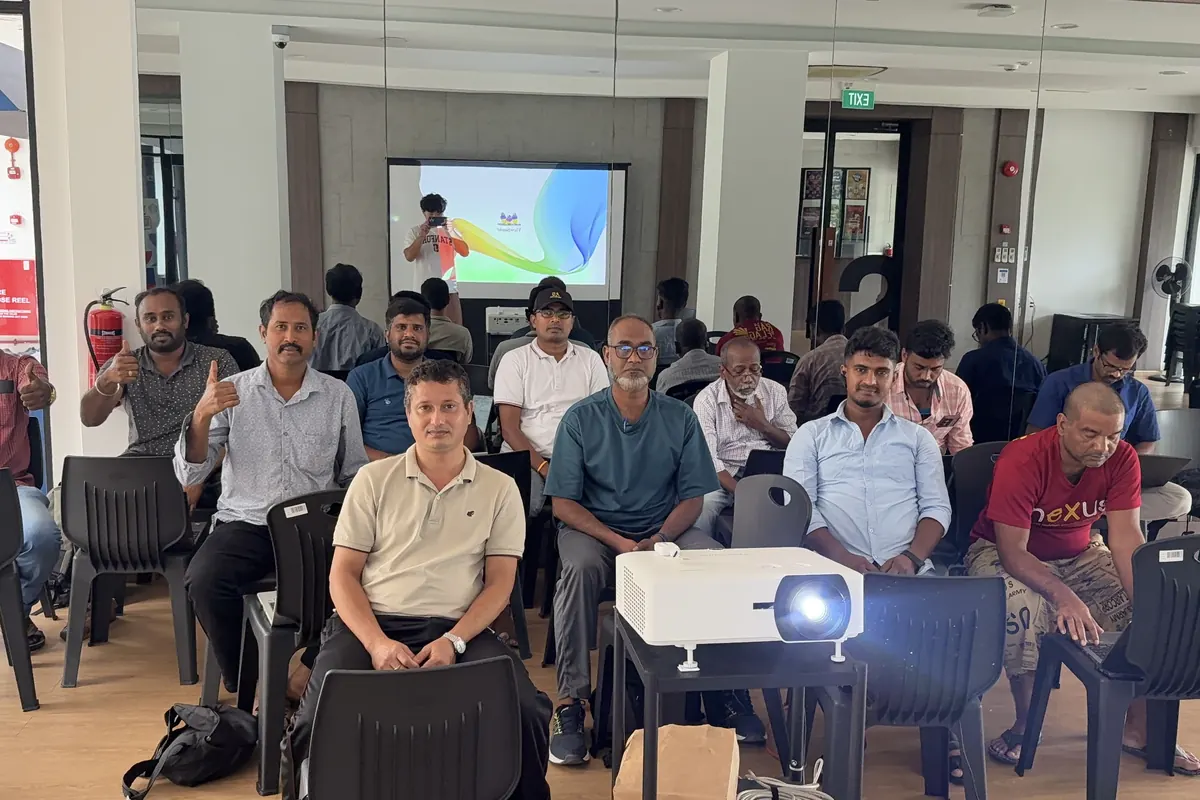
Looking for the free applied AI course instead?
The course is a separate program for migrant workers, referred through our partner charity It’s Raining Raincoats. Course learners are not members of the build teams.